

Finding the Intersection
Moving towards a career that incorporates and supports the different facets of your life

I’m sure you’ve been asked “what do you want to do when you grow up?”. Which morphed into “after you graduate”, “after your 1st job”, “in 10 years”. Maybe life was easy when you were 5 and wanted to be a teacher, but now you have life experience and degrees and there are so many options that you don't even know all the options.
I have wanted to be a research scientist since grade 12. For 8 years I was barreling down this path. Once I came to halt mid-PhD and decided to take a new route, the number of routes available was overwhelming. It took 4 more years of testing options, self reflecting, and talking with people to get a better sense of *maybe* how I wanted my career to look (and I’m still figuring it out).

It can seem tempting to jump head first into a job search, especially if you just graduated or lost your job. Sometimes finding a job is necessary and critical, it’s a privilege to be able to take a minute and determine what job you actually want and makes sense with your life.
Whether you do this while unemployed and job searching or once you have a job that just pays the bills, I would argue that, although counterintuitive, taking this pause will make the job search more efficient and satisfying. Sending out hundreds of resumes often doesn’t give the results you hope for.
Once you’ve given some thought to important aspects of your life and found some clarity around life and career values, start looking at where these overlap.
There’s no right way to find ways to bring your values into your life and career (though I’m going to give you some suggestions).
Purpose vs Passion
What is the problem you want to solve (in your field, community, world)?
Aligning what’s important to you and what you value with how you spend your time can lead to a more meaningful life in general. This can also be translated to your career.
Your job does not need to be your sole purpose, but it can be more enjoyable if it is an outlet for combining your passions, expertise and usefulness. I see purpose as the intersection of values and experience and meaning.
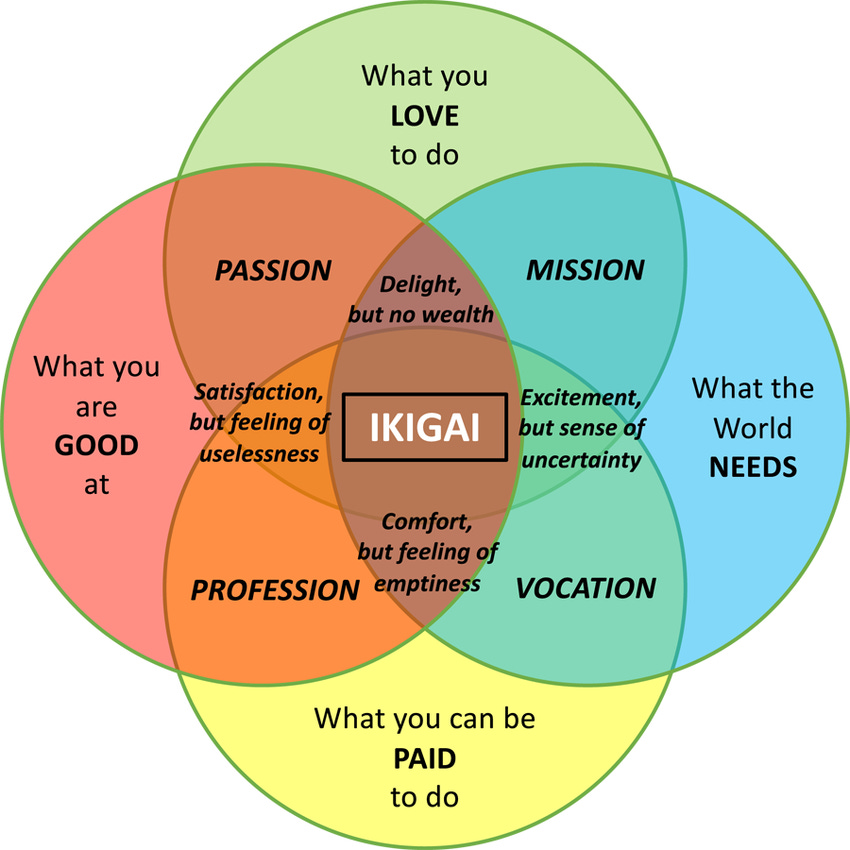
Ikigai is a Japanese concept that captures this intersection. By determining what you love, what the world needs, what you’re good at, and what you can get paid for, you can start to move closer to the merging of different aspects of your life.
Side note about passion: purpose does not equal passion. I think “follow your passion” is misleading career advice. This advice often sends people on a chase to find their passion with the hope that clarity will appear, rather than developing skills, learning, growing, and gaining experience. I recently hear it put “passion is required, but not sufficient”.
As I spent time talking to people and looking for jobs before graduating, I noticed when I became very excited about certain topics. I also began to realize my own expertise in some areas and how my unique experience could contribute to the field.
My own graduate experience and first hand knowledge of the lack of career development in grad programs, combined with my excitement to make an impact in improving these supports led me to realize helping others with their careers was my Career North Star.
Likely your first job, or even second, won’t fulfil your purpose or satisfy your passion or check all your boxes. It will give you experience and a chance to explore what your values are and move you in a direction where everything feels more aligned.
Life Influencing Career
What would your ideal lifestyle look like (career, location, family)?
Another lens to view the intersection of values and career is to plan your career based on the lifestyle vision you want.
Named by Cal Newport, Values Based Lifestyle Centric Career Planning involves thinking about how you want life to look and working backwards from there to find a career that can get you there. It’s not about following a passion or attaining a dream job but rather about envisioning your life and being strategic about making it happen.
Use your career to build up skills and experiences that you can leverage down the road to craft the life you want.
This is still very much a work in progress for me, but I’m working now to lay the foundation and will build off this once I decide what that life looks like. Your vision for your life can of course change, values can shift over time, but look 5 years out and start moving in the right direction.

To get more practical about finding that intersection in your life, write down 5 things for each of these questions and why. These aren’t job specific, consider your whole life.
What do I like doing?
What gives me energy?
What makes me happy?
What am I good at?
What am I proud of?
The point of this is to get clear on what is important and why it is important. Also to notice the complexity of these answers and how your values show.
“I like running”
Because…
“I like being outside”, “I like getting stronger”
Many people (especially those socialized as women) have trouble confidently stating what they’re good at or proud of (myself included). Try investigating what made you like that experience so much.
“I like organizing conferences and events”
Because…
“Giving back to my community energizes me”
“I am good at keeping track of small details”
“I felt proud when I ran a full day symposium for my department”
Writing this out, similar to mind mapping, helps you dig deeper and be specific. It’s about finding that Career North Star and moving towards it, while integrating and aligning your lifestyle, interests, and values along the way.
However you decide to integrate your values into your career, the goal is to find clarity on what’s important and how that aligns with your skills, interests, and experiences before finding a new job or switching jobs.